Residential Roof Replacement - 9 Terms Homeowners Should Know
When it comes to maintaining your home, the roof is one of the most crucial components. It protects you and your family from the elements, adds curb appeal, and plays a vital role in energy efficiency. However, if you’re like many homeowners, roofing terminology can be confusing, especially when it comes time for Colorado roof repairs or residential roof replacement. Knowing the right terms can help you make informed decisions, communicate effectively with contractors, and avoid unnecessary costs.
At Troost Roofing, we want to help you better understand the language of roofing. In this article, we’ll break down common roofing terms, so you feel more confident when dealing with roofing projects.
Shingles
Shingles are one of the most common types of roofing materials. They are flat, overlapping pieces typically made from asphalt, wood, or metal, used to cover the roof’s surface. Asphalt shingles, which are the most popular due to their affordability and durability, are often used in residential roof replacement.
Dimensional Shingles: These have a flat, uniform appearance and are often less expensive than other types.
Impact-Resistant Shingles: These have “rubberized” asphalt and a thicker fiberglass mat, which makes them hold up better to hail and adverse weather.
Designer Shingles: These are like the roofing-equivalent of owning a Gucci bag. Their primary appeal is appearance because they come in a wider range of shapes and colors, which can really make a home pop.
Designer Impact-Resistant Shingles: the most expensive shingles that have the best aesthetics and are twice as heavy as dimensional shingles. They will last longer than cheaper shingles.
Pro Tip: When you get your roof replaced, save any extra shingles that the contractor leaves with you. When contractors perform Colorado roof repairs, they may give you a discount if you have extra shingles that they can use to complete the repair.
Roof Decking (Sheathing)
Roof decking refers to the material that forms the base of your roof. Typically made from plywood or oriented strand board (OSB), decking provides structural support for your roof and the shingles or other roofing materials placed above it.
Underlayment
Underlayment is a layer of material installed between the shingles and the roof deck. Its primary function is to provide an extra barrier against water infiltration. There are several types of underlayment:
Felt Underlayment: A traditional choice made from a combination of asphalt and fiberglass, providing a waterproof layer.
Synthetic Underlayment: A newer option that’s lighter, more durable, and often more resistant to UV damage than felt.
One of the best underlayments for Colorado homes is Grace Ice and Water Shield. It’s known for safely sealing a home to protect the interior from ice damage. When you evaluate a roof replacement bid from a roofing contractor, be sure that you check if they are using Grace. Grace is a must for homes in snowy climates.
Ridge and Hip
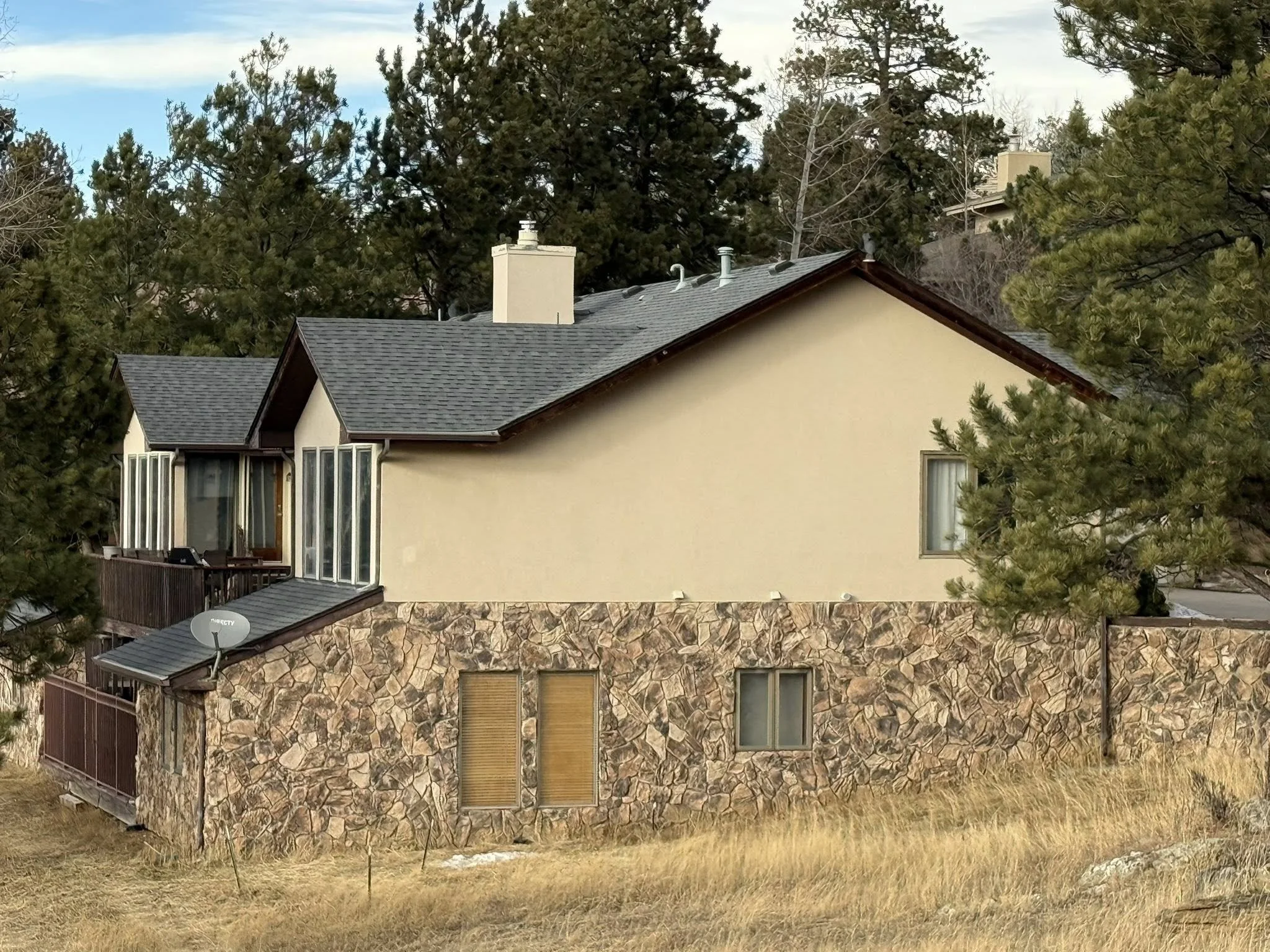
A ridge is the horizontal peak where two roof slopes meet. The ridge is often covered with special shingles or ridge caps to ensure that water doesn’t seep in.
A hip is an external angle formed by two roof planes. Hip roofs have slopes on all four sides and are often more stable in high winds.
Both these areas require precise roof installation in order to prevent leaks and wind damage.
Flashing
Flashings are pieces of metal used to direct water away from critical areas of the roof. It prevents water from infiltrating vulnerable points on the roof. Flashing is most commonly installed in the following areas:
Chimney
Around vents and skylights
Where the roof meets a wall
Around any other roof penetrations
Flashing is an extremely important part of a roofing system because it prevents leaks. Often when homeowners notice a leak, the underlying cause is that the flashing was not properly installed around a new roofing penetration. This would necessitate a spot repair in which a roofing contractor would install additional flashing and tie that into the existing roofing system.
What are the Areas Around the Eaves?
The eaves are the lower edges of the roof that project beyond the walls of the house. An overhang refers to the portion of the roof that extends beyond the exterior walls. Properly sized overhangs can protect the exterior of the home and help with water runoff.
The underside of the eaves, which hangs over the edge of the house, is called the soffit. If you are a holiday enthusiast, then this area is the part of a house where you would hang holiday string lights.
There is also a vertical board that runs along the edge of the roofline. This is called the fascia. It is located directly beneath the roof deck; it supports the gutter system and can be an aesthetic feature in some homes.
Attic Ventilation
Proper attic ventilation is essential for maintaining your roof's lifespan. Without it, heat and moisture can build up in the attic, leading to issues such as mold, mildew, and damaged shingles. Key components of attic ventilation include intake vents and exhaust vents.
Intake vents bring in fresh air from the outside. The main type of intake vents are soffit vents (located on the underside of the eaves). Exhaust vents along the ridge allow air to escape from the attic to keep the home cool in the summer. Together, these two vents allow a home to breathe.
While some air exchange is beneficial in a home, too much can be uncomfortable for the residents, harmful to the home’s structure, and costly to the homeowner. For example, when too much hot air escapes the home, it creates ice dams that damage the roof and gutters over time. If there is too little ventilation, then a home can become too moist and mold will grow in the attic. If this is happening in your home, you may want to consider having rigid insulation installed during your next roof replacement.
Roof Pitch
Roof pitch refers to the steepness or slope of your roof. It is typically expressed as a ratio of the vertical rise to the horizontal run. For example, a 6/12 pitch means the roof rises 6 inches for every 12 inches of horizontal distance. Roof pitch plays a role in both the aesthetic and functional aspects of the roof. A steeper roof pitch helps with water runoff and prevents snow from accumulating, while a low-pitched roof is often used in modern architecture for a sleek, minimalist look.
If you are having your roof replaced, the pitch of your roof can affect the cost of the job because steep roofs require more materials and take longer to re-roof. However, mostly homeowners do not have to worry about this. Unless you live in Rapunzel’s castle, then your roof’s pitch likely won’t cause any concerns for your roofing contractor.
If you have questions about roof replacement costs, give Troost Roofing a call to get a free quote.
What Makes Gutters Important?
Gutters are installed along the edge of the roof to collect and channel rainwater away from the foundation of the home. This helps prevent water damage to the structure, including basement flooding and erosion. Gutters come in various materials, including aluminum and copper.
It is very important that homeowners perform routine home maintenance by cleaning out their gutters. If debris backs up in the gutters, it can result in water overflowing back onto the roof, which can contribute to a roof leak.
Got Questions? Contact Troost!
Understanding these basic roofing terms can help you navigate roof replacement and repairs with greater confidence. Whether you’re repairing your roof, replacing shingles, or simply maintaining your system, knowing the terminology will help you communicate effectively with professionals and make well-informed decisions. If you ever have any questions about your roof, don’t hesitate to reach out to the experts at Troost Roofing. We are here to help you protect your home and ensure that your roof lasts for years to come.