Residential & Commercial Roof Repair: What To Do in the Event of a Leak
When it comes to protecting your home or business in Lakewood, Colorado, your roof is the first line of defense against snow, hail, wind, and intense Colorado sun. Whether you own a residential property near Green Mountain or manage a commercial facility along Colfax Avenue, understanding when you need roof repair versus a full replacement can save you thousands of dollars.
In this comprehensive guide, we’ll cover the signs you need roof repair, how to determine whether repair or replacement is the better option, and what the repair process looks like for different types of roofing systems. If you're searching for reliable roof repair in Lakewood, Colorado, this guide will help you make informed decisions.
Why Roof Repair Is So Important in Lakewood, Colorado
Lakewood experiences a wide range of weather conditions throughout the year. Heavy snow accumulation in winter, hailstorms in spring and summer, and strong UV exposure year-round can all take a toll on roofing materials.
Ignoring minor roof damage can quickly escalate into major structural problems. A small issue requiring simple roof repair today could turn into extensive interior damage tomorrow. That’s especially true when dealing with leaky roof repair, which should always be addressed immediately to prevent mold growth, insulation damage, and structural weakening.
For commercial property owners, delaying commercial roof repair can interrupt business operations and lead to liability concerns.
Signs You May Need Roof Repair
Not every roofing issue requires full replacement. In many cases, targeted roof repair is sufficient. Here are the most common signs that your roof needs attention:
1. Water Stains on Ceilings or Walls
Brown or yellow water stains inside your home or commercial building are a clear sign you need leaky roof repair. Even small stains can indicate a breach in the roofing system.
2. Missing or Damaged Shingles
Colorado windstorms frequently lift or tear shingles. If you notice:
Cracked shingles
Curling edges
Missing shingles
Granule loss
You likely need residential roof repair.
3. Flashing Damage
Flashing around chimneys, vents, skylights, and HVAC units often deteriorates over time. Damaged flashing is one of the most common causes of leaks.
4. Ponding Water on Flat Roofs
For commercial properties in Lakewood, ponding water on flat roofing systems is a major warning sign. If water sits for more than 72 hours after a storm, commercial roof repair is likely necessary.
5. Higher Energy Bills
A compromised roof can reduce insulation performance, causing heating and cooling systems to work harder - especially during Colorado’s cold winters and hot summers.
Roof Repair vs. Roof Replacement: How to Decide
One of the most common questions property owners ask is whether they need roof repair or a full replacement.
Roof Repair Is Usually the Right Choice If:
Damage is localized to a small area
The roof is under 15 years old (depending on material)
There are isolated leaks
Storm damage is minimal
A professional inspection by Troost Roofing can confirm whether a simple repair will restore full performance or if you need a complete roof replacement.
Roof Replacement May Be Necessary If:
The roof is near the end of its lifespan
There are widespread leaks
Structural decking is compromised
Repairs have become frequent and costly
If more than 30% of the roof is damaged, replacement often makes better financial sense long-term.
Residential Roof Repair Process
Residential properties in Lakewood typically use asphalt shingles, tile, or metal roofing systems. The repair process varies by material.
Asphalt Shingle Roof Repair
Asphalt singles are the most common residential roof type in Lakewood because they perform well and look nice for the duration of their lifespan.
Repair process includes:
Inspecting the damaged area
Removing broken or lifted shingles
Checking underlayment for moisture damage
Replacing shingles and resealing
Ensuring proper alignment and sealing
For leaky roof repair, contractors also inspect flashing and roof penetrations, then re-seal the entire area.
Tile Roof Repair
Clay and concrete tile roofs are durable but can crack due to hail, foot traffic or the freeze/thaw cycle.
Repair steps include:
Carefully removing damaged tiles
Inspecting underlayment
Replacing tiles with matching materials
Reworking flashings or valley metals if needed
Because tiles are fragile, professional handling is critical.
Metal Roof Repair
Metal roofs are growing in popularity in Colorado.
Repairs may involve:
Tightening or replacing fasteners
Sealing seams
Replacing damaged panels
Applying protective coatings
Metal roof repair can take longer and be more expensive than other types of roof repair. This is because metal roofs must be installed directionally, so to repair any sections, the roof must be taken apart from an edge back to the repair area.
Commercial Roof Repair Process
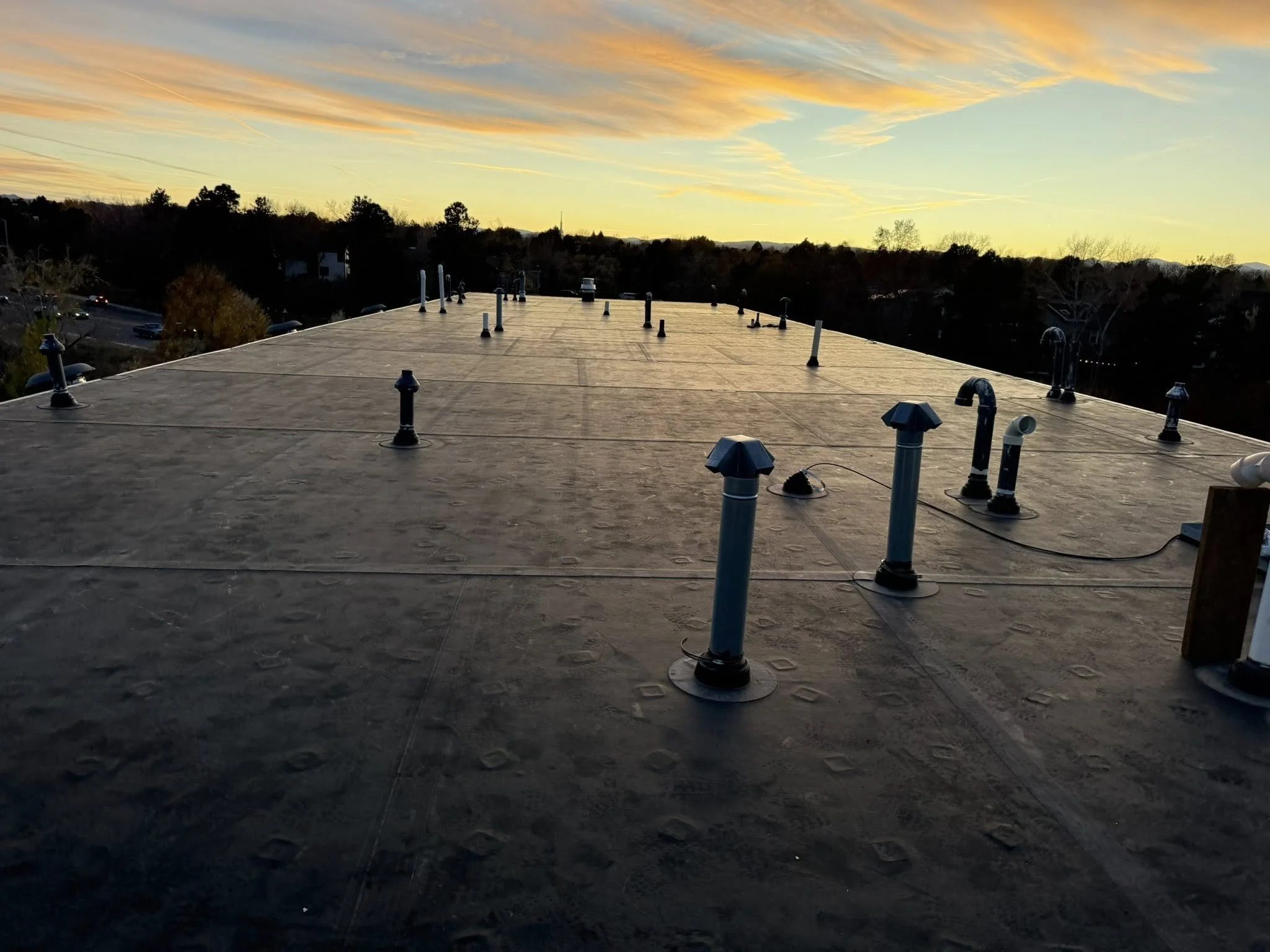
Commercial roofing systems in Lakewood, Colorado can differ significantly from residential systems. Most commercial buildings have flat or low-slope roofs. However, if your property has a pitched roof, it will likely have asphalt tiles or a metal system. The process for repairing metal roofs is the same whether the property is residential or commercial.
EPDM Roof Repair
EPDM is a common commercial roofing system for storefronts that have low-slope roofs.
Repairs include:
Cleaning and priming the surface
Applying adhesive
Installing a compatible patch
Rolling and sealing seams
Proper adhesion is key to preventing future leaks. When you have your rubber roof repaired, it is important to hire a local roofing professional like Troost Roofing who are experienced at correct EPDM roof installation.
Emergency Leaky Roof Repair in Lakewood
Colorado storms can cause sudden roof damage. If you’re dealing with active leaking:
Contain interior water damage with buckets or tarps
Avoid climbing on the roof yourself
Emergency leaky roof repair may involve temporary tarping until permanent repairs can be completed. Most commercial properties are able to operate almost normally until the leak can be repaired; however, this will depend on the needs of your business.
Quick action can save money in the long-term because it prevents:
Mold growth
Electrical hazards
Insulation damage
Structural deterioration
Harm to customers
Preventative Maintenance Reduces Repair Costs
Regular inspections can significantly reduce the need for major roof repair.
For residential properties:
Schedule periodic inspections, especially after hailstorms
Clean your gutters
Ensure that downspouts move water a safe distance away from your foundation
Have overhanging trees trimmed away
Keep an eye out for water stains, mold, and other signs of a leak
For commercial properties:
Check drainage systems
Monitor rooftop equipment penetrations
Choosing a Roof Repair Contractor in Lakewood, Colorado
When selecting a roofing contractor, look for:
Local experience in Lakewood
Knowledge of Colorado weather conditions
Proper licensing and insurance
Experience with both residential and commercial roof repair
A reputable contractor will provide a thorough inspection, make clear recommendations, and work with you as you go through insurance.
If you suspect damage to your home or business’s roof, don’t wait! A professional inspection today can prevent serious problems tomorrow and ensure your property remains protected year-round.
Give Troost Roofing a call to learn more about your roofing options! Homeowners are eligible for a free estimate!