Types of Asphalt Shingles - The Essential Homeowner Guide
Asphalt shingles top the list as the go-to roofing choice across North America. Homeowners pick them for good reason - they're durable, affordable, and easy to install. Choosing the right type can boost your home's life span, jazz up its look, and even cut energy costs. In this guide, we'll break down the main kinds of asphalt roofing shingles and key things to think about for your next roof swap.
Understanding Asphalt Shingle Composition
Asphalt shingles are made up of a few key layers that make them work so well on roofs. Each part plays a role in keeping water out and standing up to daily wear. Knowing these basics helps you see why some types last longer than others.
The Fiberglass Mat Base
The fiberglass mat forms the strong backbone of most asphalt shingles. It soaks up less water than older paper mats, which cuts down on rot and curling over time. This core keeps the shingle flat and firm, even after years of sun and rain.
Think of it like the frame of a house—it holds everything together without bending. Without a solid fiberglass base, the whole shingle could warp and fail fast. Most brands use this now, but quality varies, so check for thick mats in better lines.
Asphalt Saturation and Waterproofing
Next comes the asphalt layer that soaks into the mat for full waterproofing. High-quality asphalt stays flexible in cold snaps and won't crack in heat. This coating seals out moisture, which is a big deal for any roof. It also binds the top granules in place.
Granule Surface and UV Protection
Ceramic granules dot the top like tiny shields against the sun's rays. They reflect UV light to slow fading and cracking from heat buildup. Plus, these bits add fire resistance, giving them a Class A fire rating.
These granules come in all different colors, so homeowners can easily get shingles that complement their home’s color palette.
Primary Types of Asphalt Shingles Explained
Now that you get the build, let's look at the main types of asphalt shingles. They split into three groups based on look, build, and price. Each fits different budgets and home styles.
Three-Tab Shingles: The Economical Standard
Three-tab shingles give a smooth, flat look with cut-out tabs that line up in rows. They're the cheapest option. You can expect them to last 20 to 25 years with basic care.
These work great for simple roof replacements on a tight budget. They install fast and mimic a basic, even surface. But they handle less wind—usually up to 60 mph—than fancier types.
Homeowners in mild areas love them for the low upfront cost. Just know they show wear faster in tough weather. If cost rules, start here.
Architectural (Dimensional) Shingles: Depth and Durability
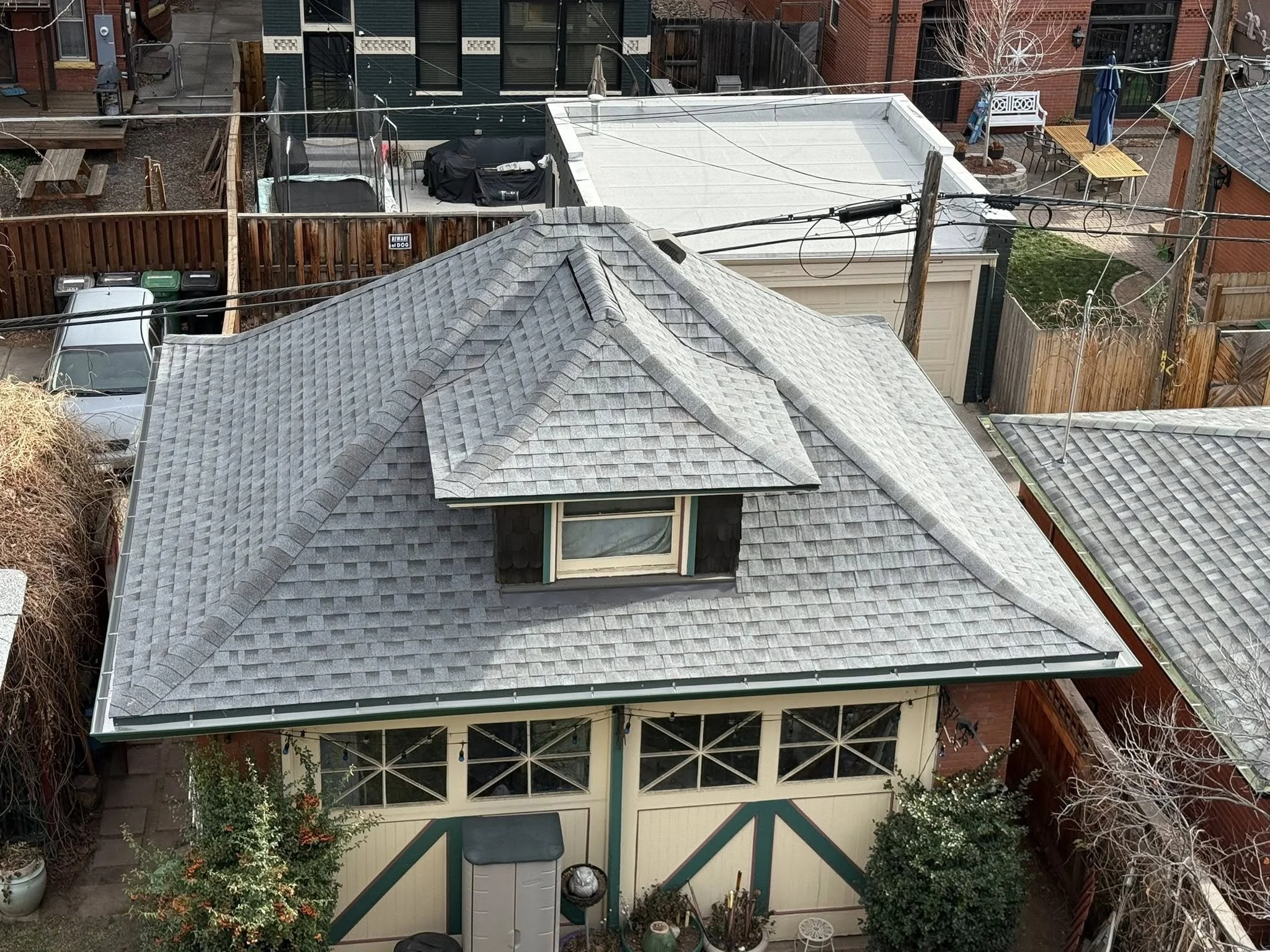
Architectural shingles, also called dimensional or laminates, stack layers for a thicker, more varied appearance. This mimics fancy wood shake shingles without the hassle. They resist winds up to 130 mph and come with limited lifetime warranties.
People flock to them for an upscale vibe on everyday homes. The extra thickness adds strength against wind.
You'll see shadows and texture that boost curb appeal. They're a smart middle ground for most replacements. Durability makes them worth the bump in cost.
Premium/Designer Shingles: Luxury Simulation
Designer shingles aim high, copying slate or cedar shakes with detailed patterns and colors. They weigh less than real stone but look just as rich. They amp up a home's aesthetic value.
These shine on custom homes or historic venues needing that premium touch. Warranties are limited lifetime, and some come with top-notch impact ratings. Brands like CertainTeed or GAF lead with options that please the eye.
If aesthetics drive your choice, these deliver without any upkeep. They are perfectly suited for steep roofs which may be more visible from the ground. The investment shines in resale appeal.
Critical Factors in Shingle Selection for Roof Replacement
Climate and Weather Resistance Ratings
Your local weather dictates shingle strength needs. In windy spots, seek rated for 135 mph or higher. Hail belts call for UL 2218 Class 4 impact scores to shrug off damage.
Hot, dry areas need UV blockers to fight sun damage. Cold zones? Flexible asphalt prevents freeze/thaw cracks. Check labels for these ratings before buying.
Warranty Coverage and Manufacturer Reputation
Warranties split into material (covers any defects in the shingles) and workmanship (covers any issues with the installation). Each brand of shingles offers slightly different warranties (such as proration times.)
When you register your material warranty with the shingle manufacturer, be sure to ask about transferability. In most cases, warranties can be transferred to the new homeowners if you sell, whereas others are specific to the homeowner who had the new roof installed.
Color Selection and Roof Heat Reflection (SRI)
Shingle color can have an impact on attic heat and power bills. Dark shingles tend to soak up a bit more heat than lighter colored shingles. Light shades reflect more, cooling things down.
SRI measures this—higher numbers mean better heat reflection.Cool roof shingles with SRI over 20 are ideal for hotter parts of Colorado like Denver and Aurora, whereas if you live in the mountains where temperatures stay cooler, you don’t have to worry quite as much about SRI.
Beyond heat and cooling considerations, roofing contractors recommend choosing your shingle colors in natural light. Some homeowners will go with the same color shingles as their old roof; others will want a color that will enhance curb appeal.
Underlayment and Ventilation Synergy
There’s more to a roofing system than just the shingles. Everything under the shingles is referred to as the underlayments. This includes Grace Ice and Water Shield, which is the market-leading synthetic membrane that acts as a vapor barrier.
A roof can’t perform up to standard without ventilation, such as attic vents, vented ridges or soffit vents. These are vital for keeping the air flowing - believe it or not, homes need to “breathe” in order to stave off moisture which can cause rot.
Another aspect of roof performance and home climate control is insulation. When you think of insulation, you may be imagining the fluffy stuff up in your attic. However, rigid insulation is also used. This comes in the form of panels and can be installed during a reroof. In short, it possesses R value so your home stays cool in the summers, warm in the winters, and so escaping heat doesn’t create ice dams.
Conclusion: Finalizing Your Asphalt Shingle Decision
Asphalt shingles come in three tabs for budget, architectural for balance, and designer for flair - each with trade-offs in cost, look, and strength. Weigh your area's weather against home style and cost. The right choice guards your investment for decades.
Got questions? Troost Roofing has answers. Troost has served mountain communities all over Colorado for over 50 years. Our team has the expertise to evaluate your home’s climate needs, talk you through your options, and recommend the shingle that best suits your needs and your budget. Give Troost a call to get a free estimate for your next roof replacement.